


10.27.2026
By uscbknpt
Back In the Groove
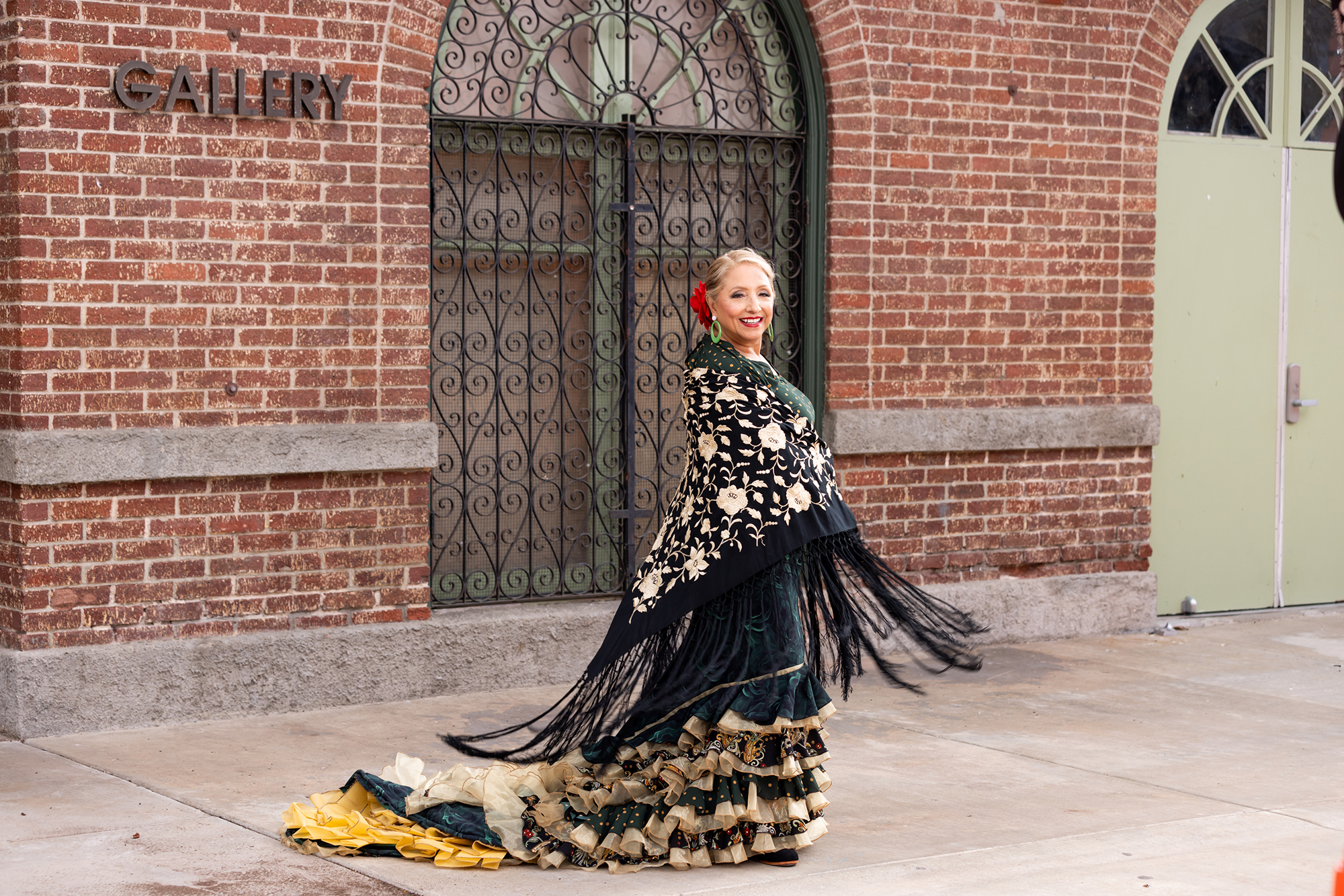
After a fall injured Yolee Casagrande, associate administrator of nursing at Keck Hospital of USC, an interdisciplinary physical therapy and occupational therapy team — working alongside Keck Medicine of USC physicians — helped her return to work and, even more importantly, to her flamenco heels.
BY JAMIE WETHERBE MA ’04
AS A HEALTHCARE PROVIDER AT USC for more than 34 years, Yolee Casagrande, associate administrator of nursing at Keck Hospital of USC, has cared for countless patients. But, one morning in 2023, a fall sustained while getting ready for work landed her on the receiving side of care — as a patient.
“I’d purchased a brand-new shower mat that was supposed to stick to the tile. Well, guess what? It didn’t,” she says. “When the mat slid, it was like stepping on a banana peel.”
Casagrande tore her hamstring and severely fractured her left arm.
“I immediately knew there was something wrong. I could see that my arm was twisted in a way that it shouldn’t have been,” she says. “It was like being in a nightmare.”
Paramedics rushed Casagrande to a nearby emergency room before she was transferred to Keck Hospital of USC, where she spent 12 days. Imaging revealed a compound fracture of her left humerus, with injuries to the radial nerve.
“I couldn’t move my fingers correctly,” she says. “It was really scary.”
To reset the bone, Casagrande underwent surgery with Associate Professor of Clinical Orthopaedic Surgery Joseph Patterson
“Who I adore,” she says. “Everybody in the OR was great. It was a painful ordeal, but I know I was blessed in every single way.”
Full-Circle Moment
During her tenure at USC, Casagrande has built close connections across the university, including through her leadership during the COVID-19 response. Her work in helping lead testing, screening and treatment efforts earned her recognition as a 2020 COVID All-Star at Keck.
RELATED: Meet the dedicated crew that keeps Keck Medicine professionals safe
While she was hospitalized, the community rallied around her.
“The people I work with and my nurses came to see me,” she says. “They even had to put a limit on the number of visitors I could have per day.”
Following surgery, Casagrande began months of rehabilitation, starting as an inpatient, where she encountered a familiar face.
“My physical therapist came in, and I said, ‘You look familiar.’ Then I noticed her name,” Casagrande recalls.
The therapist had been one of Casagrande’s patients during the pandemic three years earlier.
“She said, ‘Yes, Yolee. You took care of me when I had COVID. Now it’s my turn to take care of you,’” Casagrande says. “I was crying. She was crying. It was incredible the way it came full circle.”
Working in Rhythm
When Casagrande was successfully discharged to continue outpatient rehab, her physical therapy and occupational therapy team included Instructor of Clinical Physical Therapy Lila Marcial-Hernandez DPT ’23 and Assistant Professor of Clinical Occupational Therapy Aimee Aguillon OTD ’19.
From the start, the team made Casagrande’s goals central to her care.
“They focused on what I was about and looked at me as an individual,” Casagrande says. “I’m a nurse, but I’m also a dancer. Dancing brings me joy.”
A longtime flamenco performer, Casagrande’s goals included returning to work without pain — and getting back to dance.
“They incorporated my personality and the thing that gave me joy into this very difficult situation,” Casagrande says. “I could do very little, but it didn’t matter. It changed the game for me.”
Marcial-Hernandez focused on rehabilitating her hamstrings, gradually introducing stretching and mobility.
“The strain was fairly extensive considering the type of fall,” Marcial-Hernandez says. “Her job requires her to walk the hospital campus, so we wanted to make sure she wasn’t feeling too much tension, either from the muscle or the nerve.”
Casagrande brought the same work ethic she is known for at USC to her rehabilitation.
“She absolutely took ownership and put in as much effort as possible,” Marcial-Hernandez says. “She’s also a wonderful dancer, so it was about getting her back into the groove of things.”

Starts With a Spark
The prognosis for Casagrande’s left arm was initially less certain. She was unable to lift her shoulder into flexion and was unable to control her fingers.
“I really thought I was going to lose the function of my arm and hand for sure,” Casagrande says. “Then I met Aimee.”
Through regular occupational therapy sessions targeting stiffness, range of motion and functional activity, Aguillon also watched closely for signs of motor and sensory recovery.
“It’s hard with nerve injuries because I don’t know how much function will return, if at all,” Aguillon says.
Then Aguillon saw a spark of movement in the fifth digit.
“At that point, we’re golden. It’s all going to come back,” Aguillon says. “We just have to wait.”
For Casagrande, that guidance was critical.
“I was always amazed at how Aimee understood the nerve and what should be happening next. And it happened next,” she says. “It took months, but she gave me a road map. Especially as a nurse, I needed to understand clinically what was happening.”
Choreographed Care
As Casagrande regained function, her providers incorporated more flamenco into her therapy.
“There were other priorities, but flamenco was her passion,” Aguillon says. “I knew that was our goal.”
With a recital coming up on the calendar, the team worked toward getting Casagrande safely back on stage.
“We were on the same page when it came to progressing her level of activity and her return to dance,” Marcial-Hernandez says.
Casagrande shared the movements she needed to perform.
“I learned what the dance involved and how much the arm had to move,” Aguillon says. “Once she got the finger extensors, I added the castanets to the exercise program.”
Even as a seasoned healthcare provider, Casagrande hadn’t expected this type of individualized treatment from occupational therapy.
“I never would have thought it was like it was — it was a godsend,” she says. “Who else does castanets in rehab?”
Dance Goals
Casagrande’s rehabilitative and surgical teams worked closely throughout her recovery, coordinating treatment and attending her follow-up appointments together.
“This is one of the best things about our clinic — the surgeons are right next door,” Aguillon says. “So, we collaborate on the common goal: safe progression. I think that approach works really well and contributes to patient satisfaction.”
Keck’s physical therapy and occupational therapy providers also co-treated dance-focused sessions as Casagrande’s discharge and recital approached.
“We wanted to make sure she felt comfortable using her upper and lower extremities at the same time,” Marcial-Hernandez says.
Palos — the traditional music of flamenco — played from laptops as Casagrande practiced her flamenco choreography in the clinic.
“Yolee brought in her heels so we could work with the shoes she’d perform in,” Aguillon says.
When showtime arrived and Casagrande took the stage, Aguillon and Marcial-Hernandez were in the audience.
“We both went to that first recital,” Aguillon says. “She was so proud and wanted us to see her perform. She even invited my daughter, who dances.”
For Marcial-Hernandez, watching Casagrande perform was especially rewarding.
“It felt like a culmination of all the months of hard work that she put into her rehab process,” she says.
September 2026 marked three years since Casagrande’s injury. She says she has few, if any, remaining limitations.
“It was a painful event that happened, but it still ended up being very special to me. It showed me how blessed I am,” Casagrande says. “I think it even made me a better dancer. I have more courage now than I did three years ago, that’s for sure.”