


12.12.2025
By uscbknpt
The Ultimate Gift
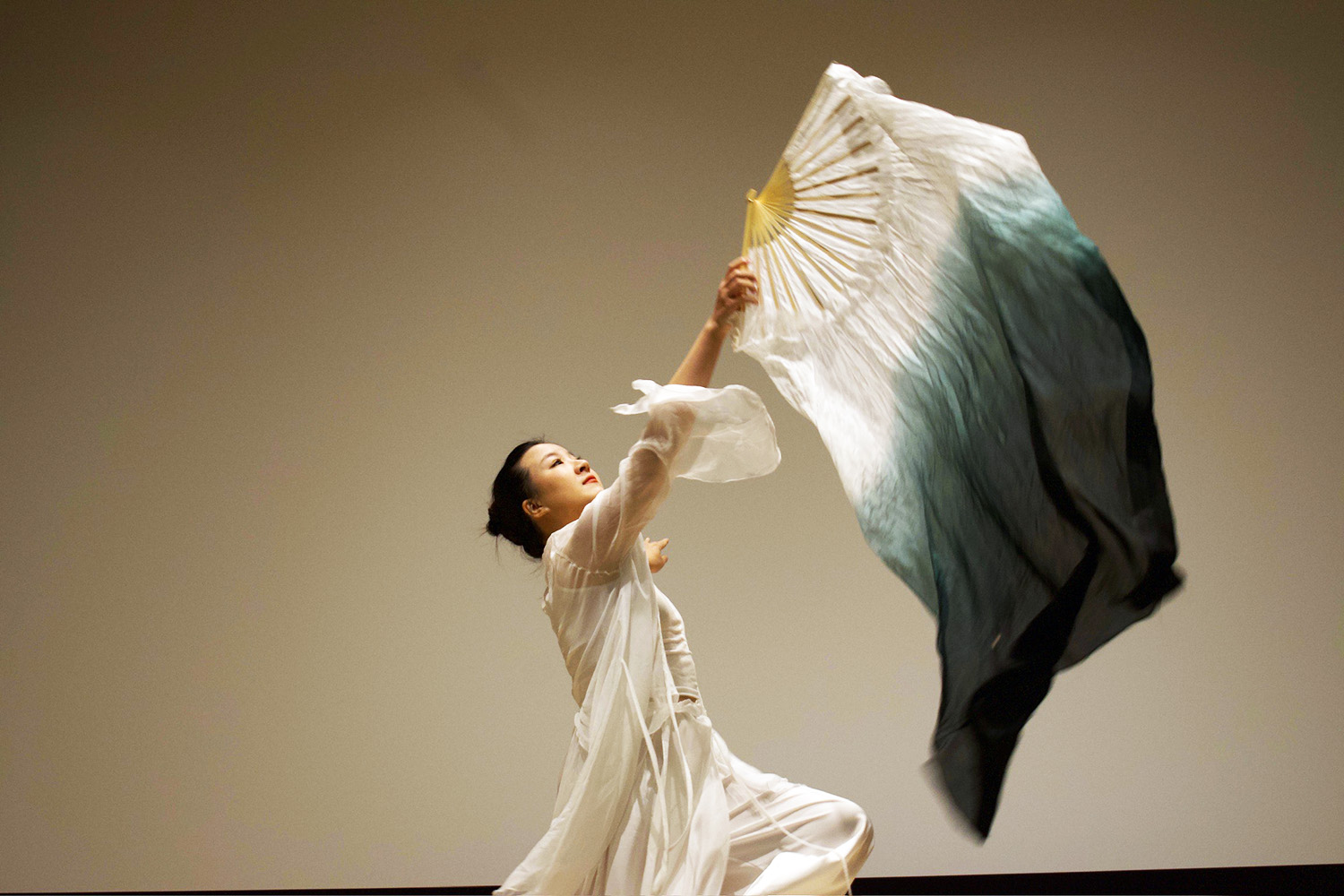
ABOVE: Yiran Tang DPT ’28 is just one of the performers who showcased their appreciation during the Donor Appreciation Ceremony. Here’s she performs “Upwards to the Moon” by Sa Dingding. Tang calls her dance to the song, “Tracing the Moonlight,” where moonlight is meant to represent loved ones, remembrance and emotional connection. “It’s meant to feel gentle and always present,” Tang said. (PHOTO: JULIA VALDEZ DPT ’28)
USC is home to one of a few DPT programs nationwide to offer its students a dedicated anatomy lab. Earlier this month, the Division will hold its third annual donor appreciation ceremony to thank the family members whose loved ones donated their bodies to educate future physical therapy professionals.
BY ANDY FAUGHT
ON DEC. 9, FIRST-YEAR DPT STUDENTS converged on Mayer Auditorium to impart a simple, but important message: Thank you.
On that day, they lit 20 candles, one for each individual who willed their body to science through USC’s Anatomical Gift Program. With their gift, donors provide DPT students a hands-on anatomy experience that allows them to engage directly with the human body’s muscles, tendons, nerves and bony structures.
“It’s a huge gift that creates this ripple effect of knowledge for students to carry forward with them into their careers,” said Director of Anatomical Sciences and Associate Professor of Clinical Physical Therapy Kate Havens MS ’05, PhD ’13, who organized the third annual appreciation event, which will be attended by donor family members.
A Gift that Keeps on Giving
During their first semester, each student spends at least 30 hours in the anatomy lab.
“Anatomy is the foundational science of physical therapy,” Havens said. “A strong understanding of anatomy is critical to their future career. Donors are a gift that keeps on giving.”
Other physical therapy programs might provide two cadavers, and at many institutions, physical therapy programs often share anatomy labs with medical or dental schools. USC DPT students, however, get the opportunity to work in a lab dedicated solely to them. The medical school and dental school have their own separate donor facilities.

Director of Anatomical Sciences
Associate Professor of Clinical Physical Therapy
Most donors are older adults, often in their 60s, or well into their 80s and 90s, who have chosen to donate their bodies prior to their death. DPT students work with donors for a year, after which their remains are cremated and returned to families.
The lab experience provides experience in ways that no textbook or lecture can replicate. “It gives students the chance to appreciate actual tissue characteristics and identify relationship between structures in a more meaningful way,” said Associate Professor of Clinical Physical Therapy Susan Sigward PhD ’04, whose work with students in the lab strengthens their understanding of structure and function.
In many cases, donors, whose identities are kept secret, reveal glimpses of their medical histories — hip replacements, repaired Achilles tendons or other surgical interventions. “There is an intimacy in getting to see inside somebody’s body,” Havens noted.
She added that the Division’s ceremony is inspired by the medical school’s own appreciation ceremony.
A Moment of Reflection
At the Division’s ceremony, donor families, students and faculty came together for an evening that blended reflection, gratitude and artistic expression, including music or dancing.
The ceremony begins with a reception, in which students meet donor families over food and drinks. Afterward, the formal program begins, which includes remarks from Havens, fellow faculty, the DPT program director and a student speaker.
The candle-lighting ceremony is one of the program’s most poignant moments. As candles are lit, students read short memories or statements provided by donor families.
“Certainly, tears are shed,” Havens said. “It’s meaningful and provides a sense of closure for the semester, and for the donor families.
“Our students are so grateful,” she adds, “and this ceremony helps us all pause and reflect on just how special the experience is.”