


05.08.2026
By uscbknpt
From Clinic to Lab
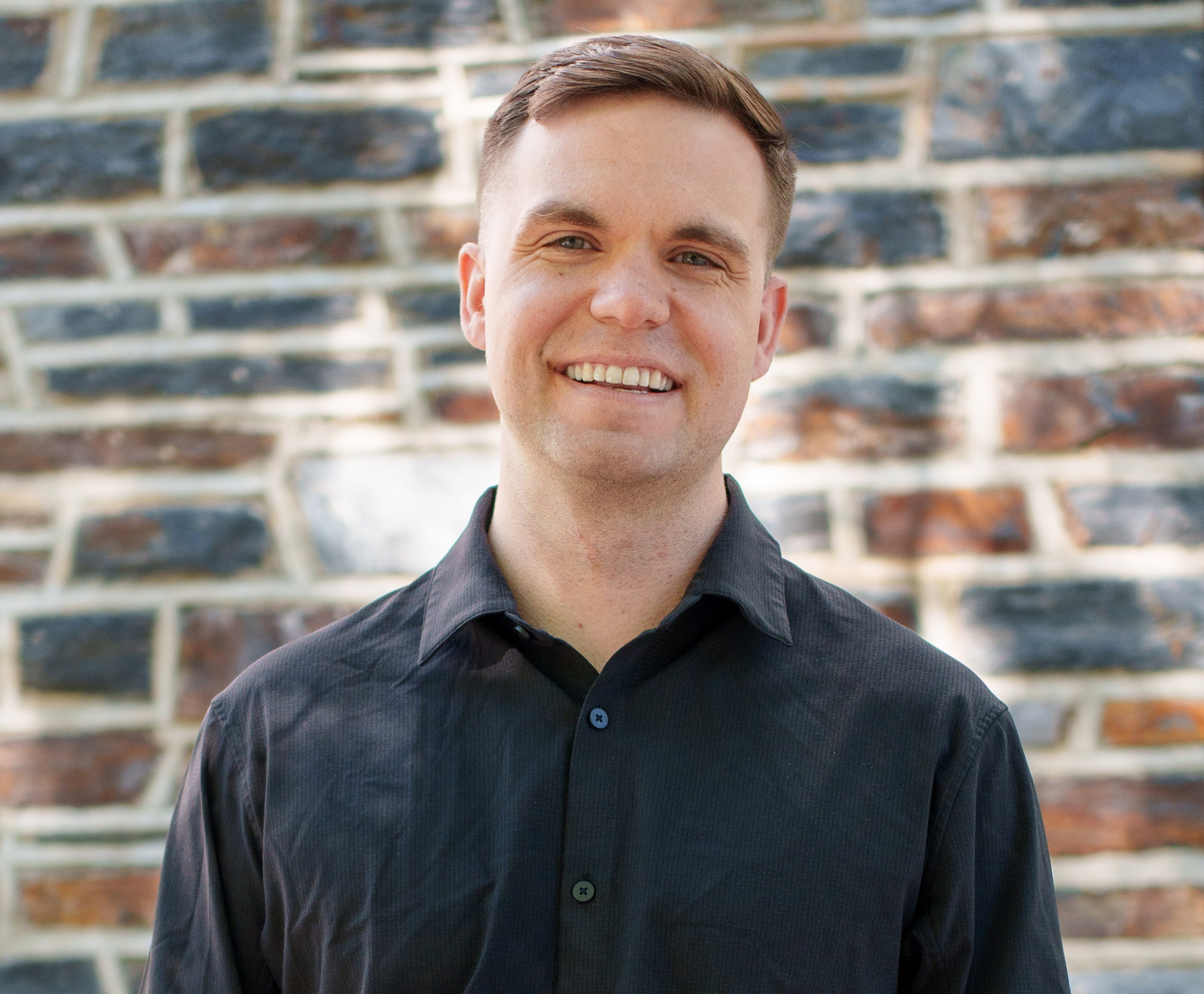
Having already earned a DPT degree, PhD graduate in biokinesiology Matt Heindel realized the more he learned, the less he felt he truly knew. This spring, Heindel joins the pantheon of clinician-scientists —professionals who can move seamlessly between clinical care and research — poised to make impactful contributions to the profession’s body of knowledge.
BY STEPHANIE CORRAL
MATT HEINDEL PhD ’26 CAME TO A HUMBLING REALIZATION while earning his doctor of physical therapy degree at the University of New England: The more he learned, the less he felt he knew.
“The depth of my questions kept expanding with the depth of my knowledge, and I couldn’t get enough of it,” Heindel says. “Even after 10- or 12-hour days at the hospital, I’d sometimes find myself more excited to get home to read a paper or two than to be back in the clinic the next morning.”
As he devoured research on central nervous system dysfunction in musculoskeletal conditions, Heindel realized he lacked the neuroscientific training to fully understand the work he was consuming. That gap pushed him toward becoming a clinician-scientist — a highly trained professional who is able to move seamlessly between the worlds of patient care and research.
The Seattle-native applied to USC’s PhD program in biokinesiology after discovering that faculty members Lori Michener and Jason Kutch were leading a grant using functional magnetic resonance imaging (fMRI) to study pain and motor systems in chronic rotator cuff tendinopathy.
“Getting to sit between these two experts trying to solve the same problem, and watch them approach it from different angles, is an education I don’t think I could have pieced together anywhere else,” Heindel explains.
Clinician-Scientists: Uniquely Positioned To Make Meaningful Change
His interest in chronic pain is personal. A baseball injury in high school led him to physical therapy and eventually to an undergraduate degree in applied human biology from Seattle Pacific University.
Today, his goal as a clinician-scientist is to uncover the biology that drives the shift from injury to chronic pain and to develop interventions that can stop that transition before it begins.
Heindel sees clinician-scientists as uniquely positioned to make meaningful change.
“They let patients shape the questions they ask in research, and they let their experiments change how they approach the next patient,” he said. “It’s a loop, and the tighter you can keep it, the better.”
Because they understand clinical workflows, he added, they also know what kinds of solutions are adoptable in real practice.
Heindel says USC’s PhD program in biokinesiology excels at preparing students to think critically and encourages DPT students to consider applying.
“You’ll get a ton of experience writing about your work, presenting it and being exposed to lots of different personalities and approaches to succeeding as a scientist,” Heindel says. “But the thing you’ll leave with is confidence that you can actually solve the problems you care about because the program teaches you how to think, not just what to think.”
During his five years at USC, Heindel learned brain fMRI, musculoskeletal ultrasound, electromyography, motion capture, statistical machine learning and multiple coding languages — skills he now uses as a postdoctoral associate in anesthesiology at Duke University.
“I can walk into a new environment and contribute quickly because I’ve been thrown into enough unfamiliar situations that the initial discomfort doesn’t slow me down anymore,” he says.
Looking ahead, Heindel hopes to run a lab focused on the neuroimmune mechanisms of musculoskeletal pain while training the next generation of clinician-scientists.
“Research is the engine right now, but clinical practice will always be the motivation,” Heindel says.
The Division’s Commencement Ceremony will take place Friday, May 15 at 4:30 in Bovard Auditorium. For more information, visit our Commencement webpage.